
The Valle Crucis Conference Center and Blue Ridge Conservancy Continue to Protect Historic Campus and Headwater Streams
by Abbey Rankins, BRC Land Protection and Stewardship Fellow
For generations, the historic farms, mountain streams, and scenic vistas of Valle Crucis have remained remarkably unchanged, not by accident, but through the vision of individuals and organizations committed to preserving one of North Carolina’s most treasured rural communities. At the heart of that legacy stands a partnership between Blue Ridge Conservancy (BRC) and the Valle Crucis Conference Center (VCCC), one that continues to protect the natural, agricultural, and cultural heritage of Valle Crucis for future generations.
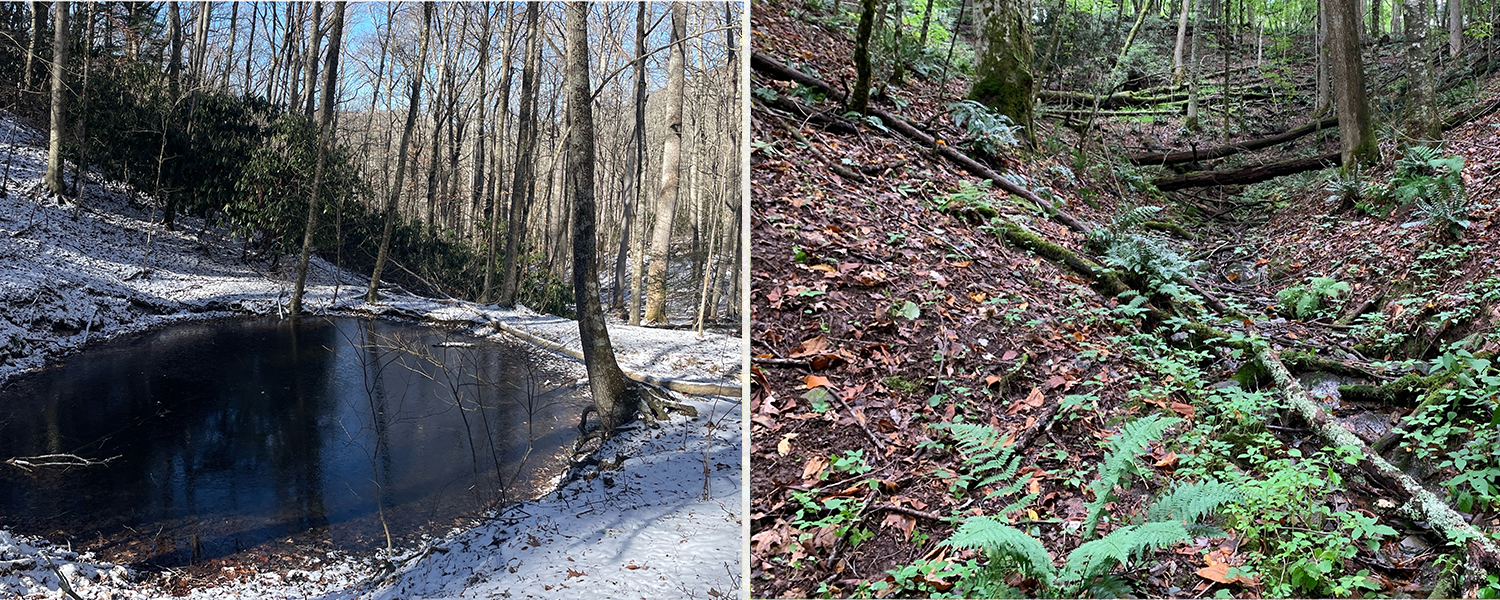
The newest chapter in BRC’s long-standing partnership with the VCCC marks a major milestone for conservation. Recently, the Conference Center granted BRC a conservation easement on 86.7 acres, ensuring that nearly all of its historic campus and headwater streams of Crab Orchard Creek will remain permanently protected.
When Margaret Love took over the role of Executive Director of the Conference Center she wanted to continue its conservation legacy. Through her leadership and dedication she worked with the Episcopal Diocese of Western North Carolina to complete the conservation of their remaining land that began over 20 years ago.
“The Valle Mountain conservation easement is the latest step in the Valle Crucis Conference Center’s stewardship of the mountain wilderness entrusted to us,” stated Margaret Love. “We have cared for this land for 130 years and counting - and we couldn’t do it without the partnership of Blue Ridge Conservancy. BRC makes protection of this great gift of nature possible, and helps us maintain it for generations. From the trails that lace the wetlands and woodlands to the farmland that feeds the High Country, BRC keeps an eye on the future of our fragile world, for our children and grandchildren.”
This latest conservation effort builds upon more than two decades of collaboration between BRC and the VCCC, a partnership rooted in a shared commitment to preserving the valley’s natural, agricultural, and cultural heritage. Nestled along the banks of the Watauga River, Valle Crucis is listed on the National Register of Historic Places as a Rural Historic District, where working farmland, historic landmarks, forests, and waterways come together to create a landscape unlike any other. Protecting this extraordinary place has long been a priority for BRC. Through voluntary conservation easements and strategic partnerships, the Conservancy has completed over 40 conservation projects in the Valle Crucis area conserving more than 2,100 acres since the late 1990s. These projects have permanently conserved historic farmland, established multiple public access sites along the Watauga River Paddle Trail, restored streambanks along Dutch Creek, expanded walking trails adjacent to Valle Crucis Community Park, and protected vital stream corridors to improve water quality while enhancing recreation and wildlife habitat.
Among BRC’s most enduring conservation partners is the Episcopal Diocese of Western North Carolina’s Valle Crucis Conference Center. Established as the Mission School in 1842, the campus has long served not only as a place of education but also as a working agricultural landscape. Early students learned farming, blacksmithing, and other practical trades, creating a tradition of land stewardship that remains central to the Conference Center’s mission today.
That shared commitment became formalized in the early 2000s, when the VCCC granted BRC two conservation easements protecting approximately 270 acres of forests and productive farmland surrounding its historic campus. These easements permanently preserved scenic views along the NC 194 Mission Crossing Scenic Byway while ensuring that the land’s agricultural, natural, and historic values would remain intact for generations to come. In 2024, BRC partnered with Holy Cross Episcopal Church and the Episcopal Diocese of Western North Carolina to conserve an additional 6.6 acres of historic farmland adjacent to the Conference Center, further strengthening the network of protected lands within the Valle Crucis Historic District.
In 2025, BRC honored the VCCC as its Conservationist of the Year during the Watauga County Farm City Banquet. The award celebrated not only two decades of formal conservation partnership but nearly two centuries of stewardship, education, and hospitality that have shaped Valle Crucis.
“Blue Ridge Conservancy completed its first conservation easement in Valle Crucis 28 years ago. We are excited to continue our conservation work in this important landscape”, stated Eric Hiegl, BRC’s Senior Director of Land Protection and Conservation Planning.
The newly completed 86.7 acre easement represents the next step in that legacy. By protecting nearly all of the historic campus, the project permanently protects the Conference Center’s forests, agricultural lands, headwater streams, and scenic landscapes while reinforcing the conservation vision that has guided both organizations for decades.
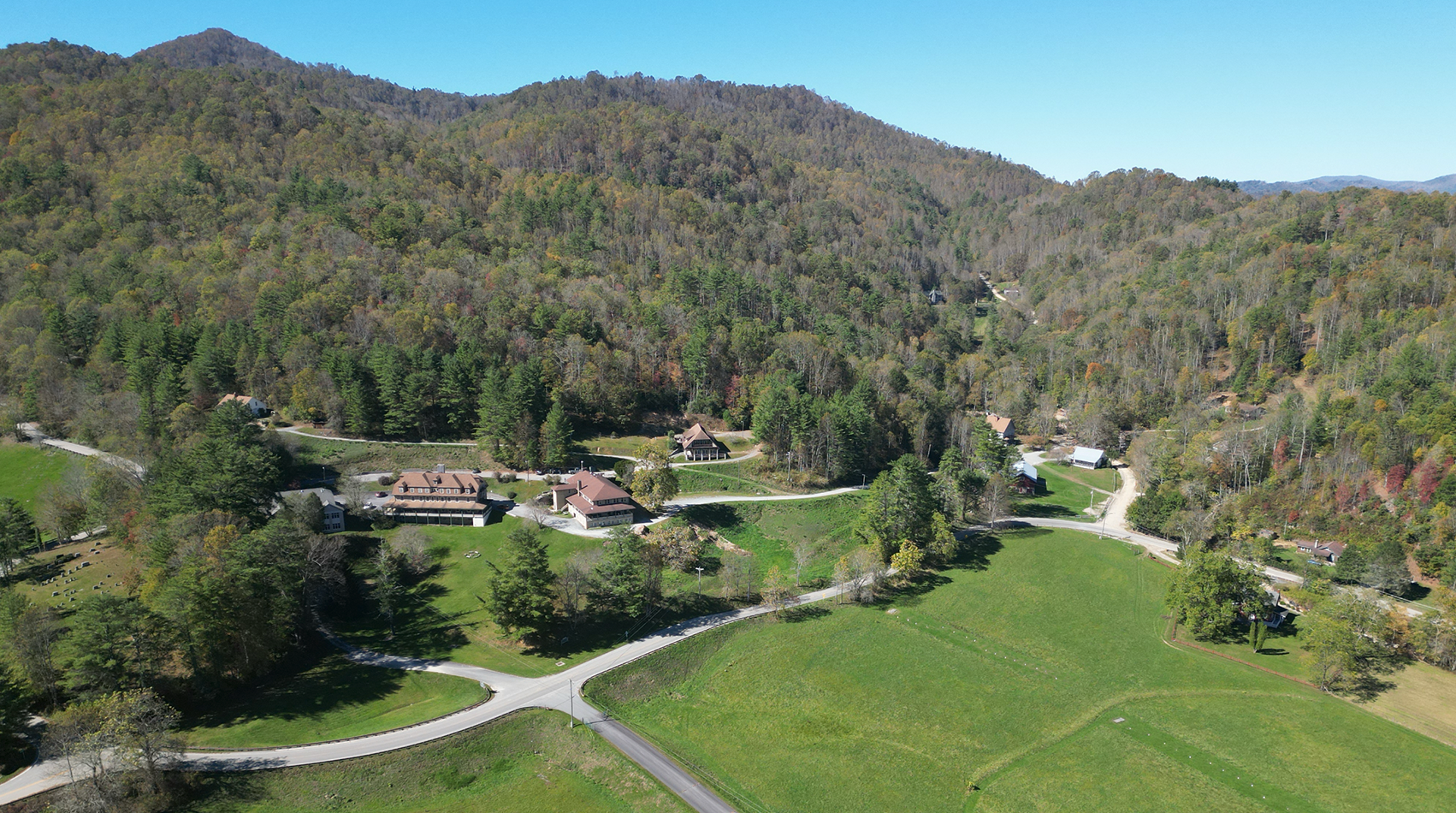
Finally, the addition of this acreage brings the total easement protected Episcopal Church land to 357 acres, and another 127 acres of land very near the Conference Center have also been protected bringing the total protected land at and within site of the Conference Center to 484 acres. Mike Leonard of The Conservation Fund, who also worked on making the backcountry of Grandfather Mountain a State Park, said “Because of the great beauty and unique history of Valle Crucis, it has been a great blessing to me, and my wife Michelle, to be able work with the Blue Ridge Conservancy on protecting not only the Valle Crucis Conference Center land but also other tracts of land that protect nearly all the valley that visitors see from the Conference Center and large portions of the mountainsides above.”
As pressures on rural communities continue to grow, the partnership between BRC and the VCCC demonstrates the lasting impact of collaborative conservation. Local landowners, churches, nonprofit organizations, farmers, volunteers, public agencies, and community members have worked together to preserve a landscape that reflects both the natural beauty of the Blue Ridge Mountains and the enduring traditions of Appalachian life. The conservation of nearly all of the VCCC’s historic campus stands as the latest, and one of the most significant, chapters in that ongoing story.